How do you choose the right grain size for your application?
Grain size is perhaps the most important choice when you work with gravel or aggregates. It determines how your surface looks, how comfortable it is to walk or drive on, how well it drains and how long everything stays neatly in place. Choose wrongly and you end up with loose gravel, puddles or an unfinished result. In this blog we explain what grain size means, how to read it, and which size suits a garden path, terrace, driveway or foundation.
What does grain size mean?
De korrelmaat geeft aan hoe groot de steentjes in een partij grind, split of granulaat zijn. Ze wordt uitgedrukt in millimeter, bijvoorbeeld 2/5, 8/11 of 16/22, of nog 2/6, 6/14 en 20/32. Het eerste getal is de kleinste korrel in de mix, het tweede de grootste.
Een korrelmaat is dus altijd een vork, geen exact getal. Binnen 6/14 zitten steentjes tussen ongeveer 6 en 14 millimeter. Hoe smaller de vork, hoe gelijkmatiger het eindresultaat oogt.
Hou rekening met het feit dat dergelijke korrels in productie in grote hoeveelheden over zeefnetten passeren. Daardoor is een exacte kalibrering technisch onmogelijk. De industrie heeft hiervoor normen ontwikkeld. Je zal dus mogelijks onder de kleinste, en boven de grootste korrel, maximaal 5% zgn. ondermaat of bovenmaat kunnen vinden. Je meet best ook altijd over de kortste zijde van de korrel. Die geraakt immers door het zeefnet.
How do you read a grain size?
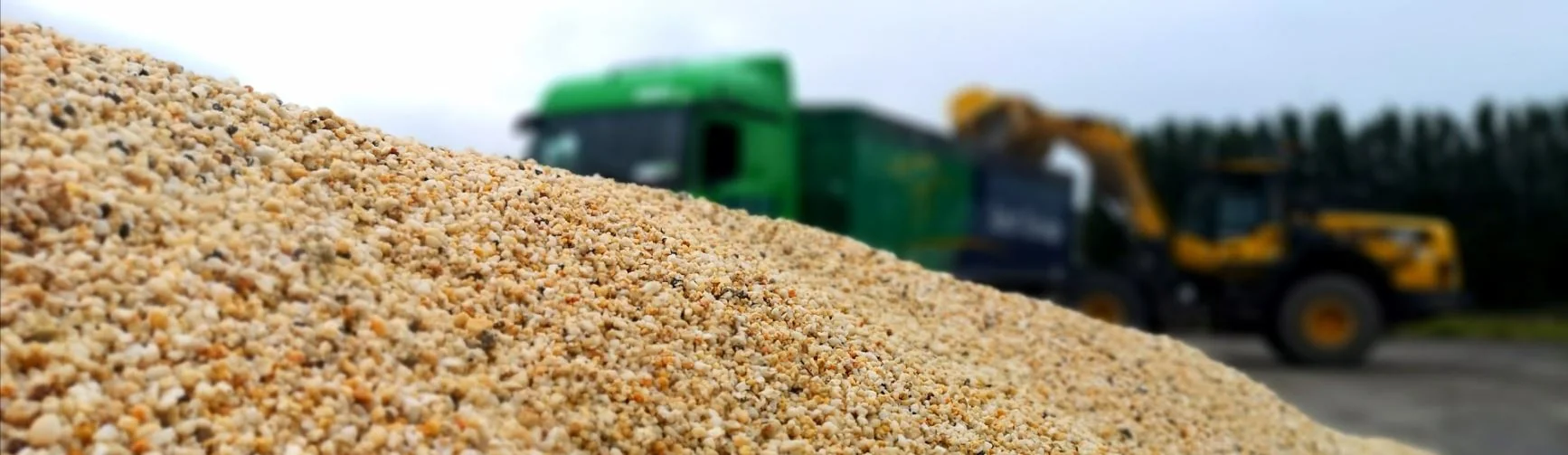
2/5 means fine grains of 2 to 5 millimetres, ideal for a smooth, even surface. 8/11 or 8/16 are medium grains that you often see on driveways and paths. Anything from 16/22 upwards you use for heavier or decorative applications.
A good rule of thumb is that the finer the grain, the more comfortable it is to walk on, but the more easily it moves. The coarser the grain, the more stable and permeable, but the rougher the surface. The skill is choosing the size that fits the use.
Fine grains: neat and comfortable
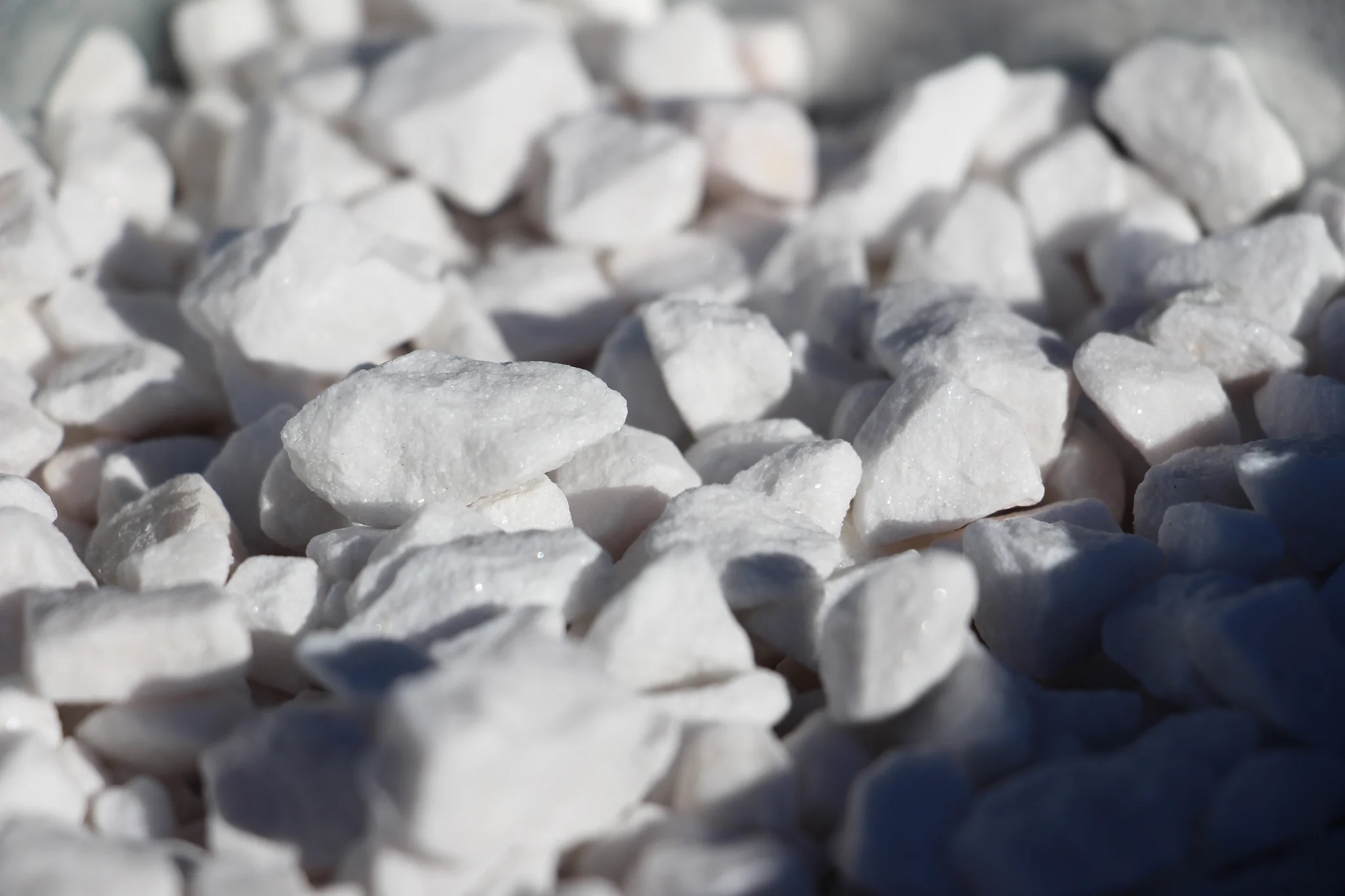
Fine grains such as 2/5 and 5/8 give an even, well-kept surface. You use them for decorative paving, garden paths, terraces and exposed aggregate concrete, wherever you want to walk comfortably and get a neat finish.
The advantage of fine gravel is that it fills nicely and shows few irregularities. The drawback is that loose fine grains stick to shoes or tyres more easily. Good edging and the right layer thickness keep that under control.
Coarse grains: sturdy and permeable
Coarser grains from 8/11 upwards are the logical choice where sturdiness and water drainage matter. Think of driveways, parking areas, foundations and drainage. Water runs easily between the grains and the stone stays stable under load.
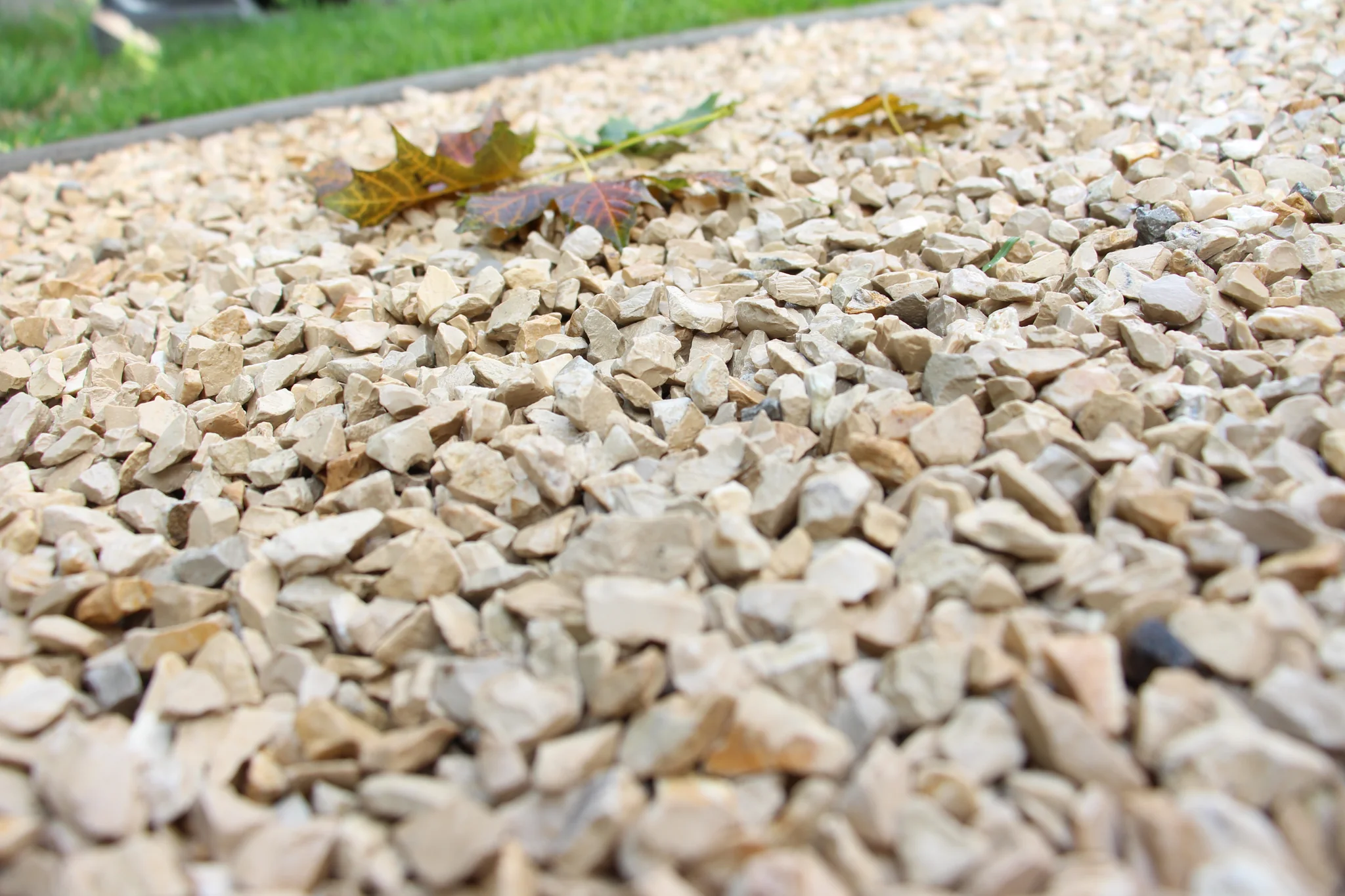
Voor een grindoprit is een gebroken korrel, ook split genoemd, extra interessant: de hoekige vorm grijpt in elkaar en blijft beter liggen dan ronde kiezel. Zo krijg je een doorlatende oprit die er natuurlijk uitziet en weinig onderhoud vraagt. Je oppervlak zal er meteen ook veel mineraler uitzien dan bij fijne korrel, die een strakker uitzicht geven.
Grain size, water drainage and foundation
Grain size plays a key role in how your paving handles water. A permeable surface with the right grain lets rainwater soak in on the spot, which matters more and more because of stricter rules on paving and water drainage.
Beneath the visible layer you usually work with a coarser foundation, such as crushed stone or mixed aggregate, which spreads the load and drains. The finer or decorative grain goes on top. That layered build-up helps determine how long your paving stays stable.
Common mistakes and how we help you
The most common mistake is choosing gravel that is too fine for a driveway, so the material gets driven away, or gravel that is too coarse for a path, which makes it uncomfortable to walk on. A layer that is too thin or missing edging also often leads to disappointment.
The right choice depends on your application, the expected load, the finish you want and drainage. Tell us what you need the material for and we will advise the grain size and build-up that fit. That way you order correctly the first time and your project stays looking good for years. Feel free to ask for advice or a quote.
Need help choosing your material?
Our experts are happy to help you choose. Ask for non-binding advice or a quote.