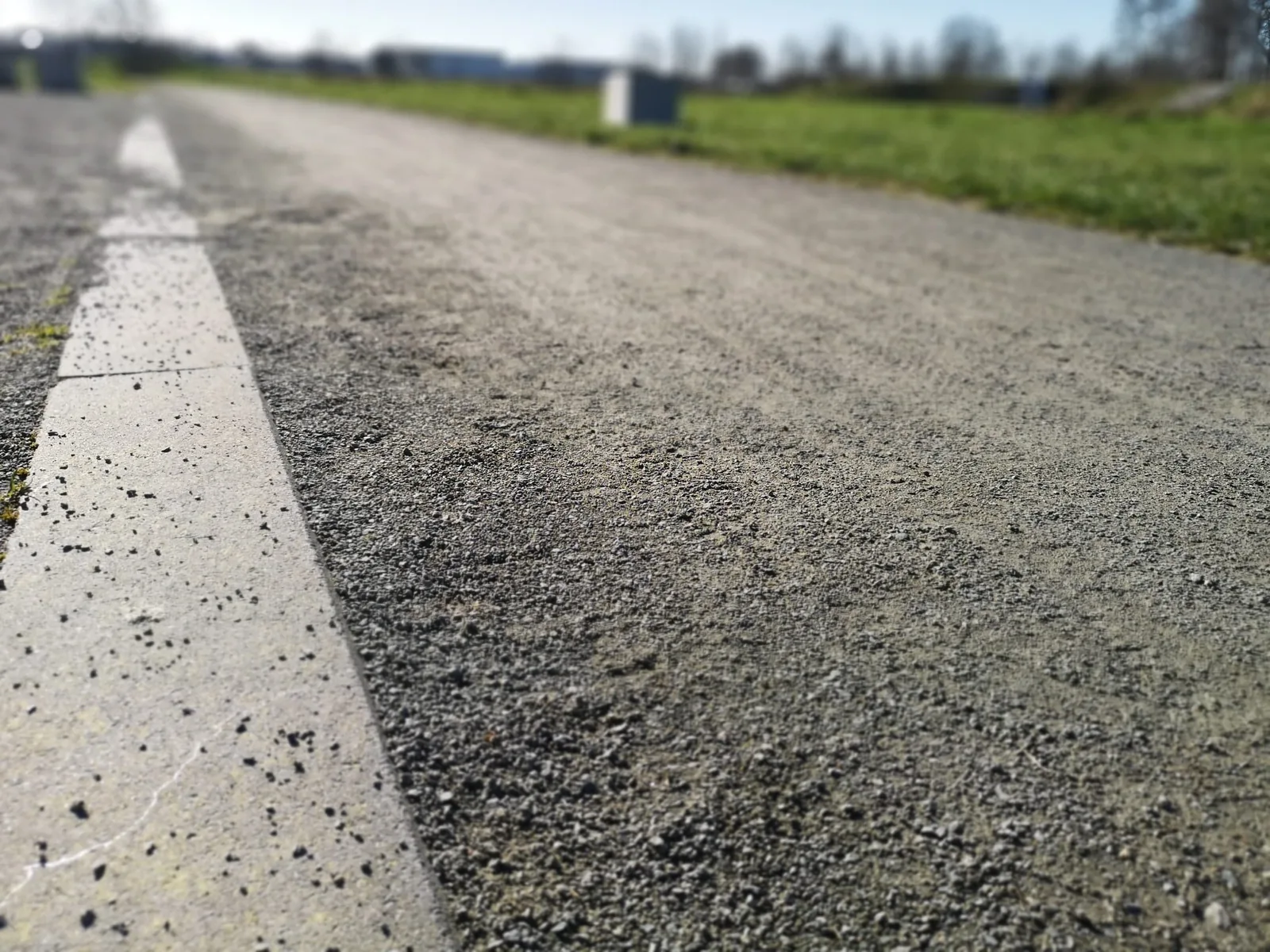
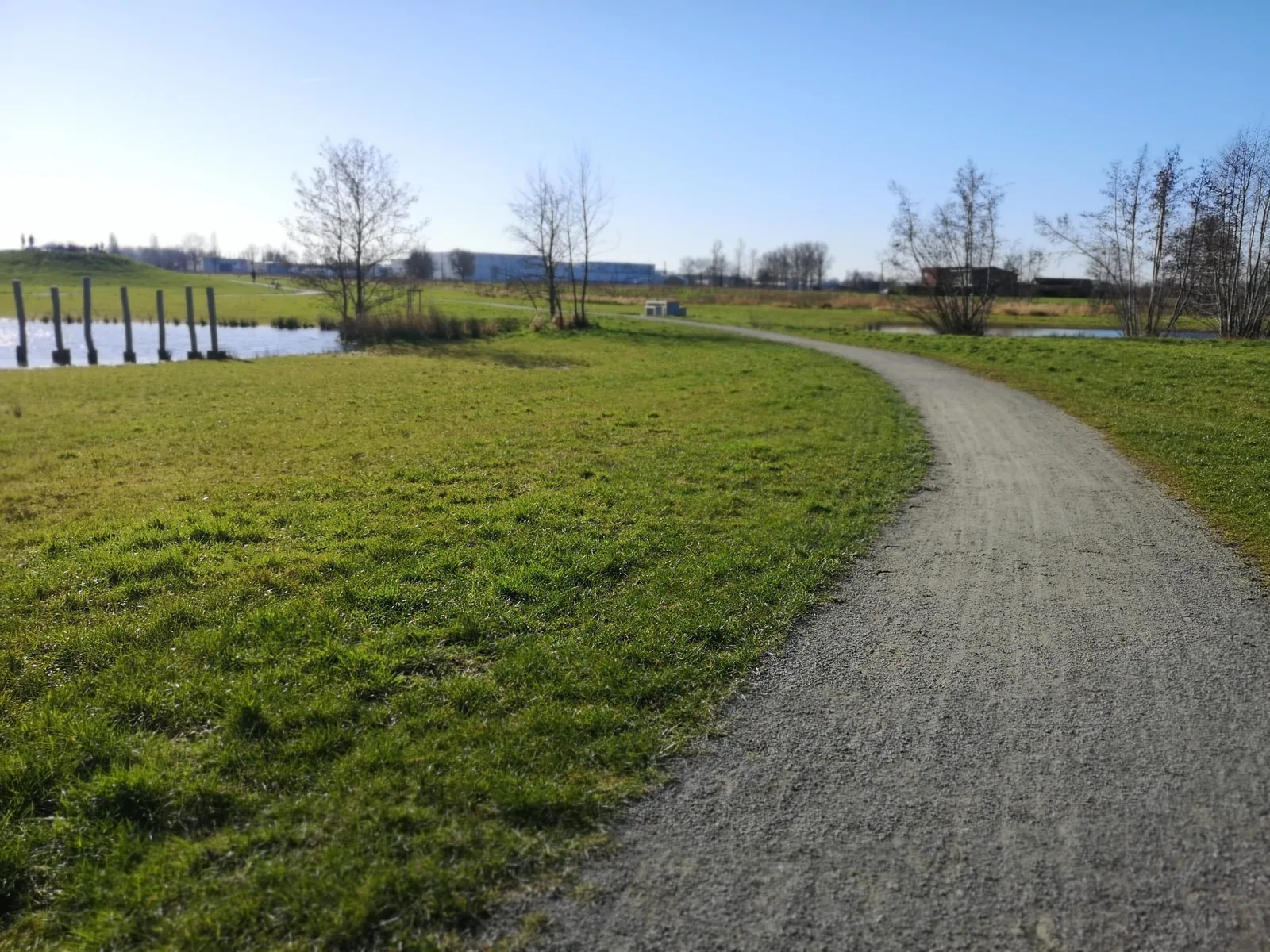
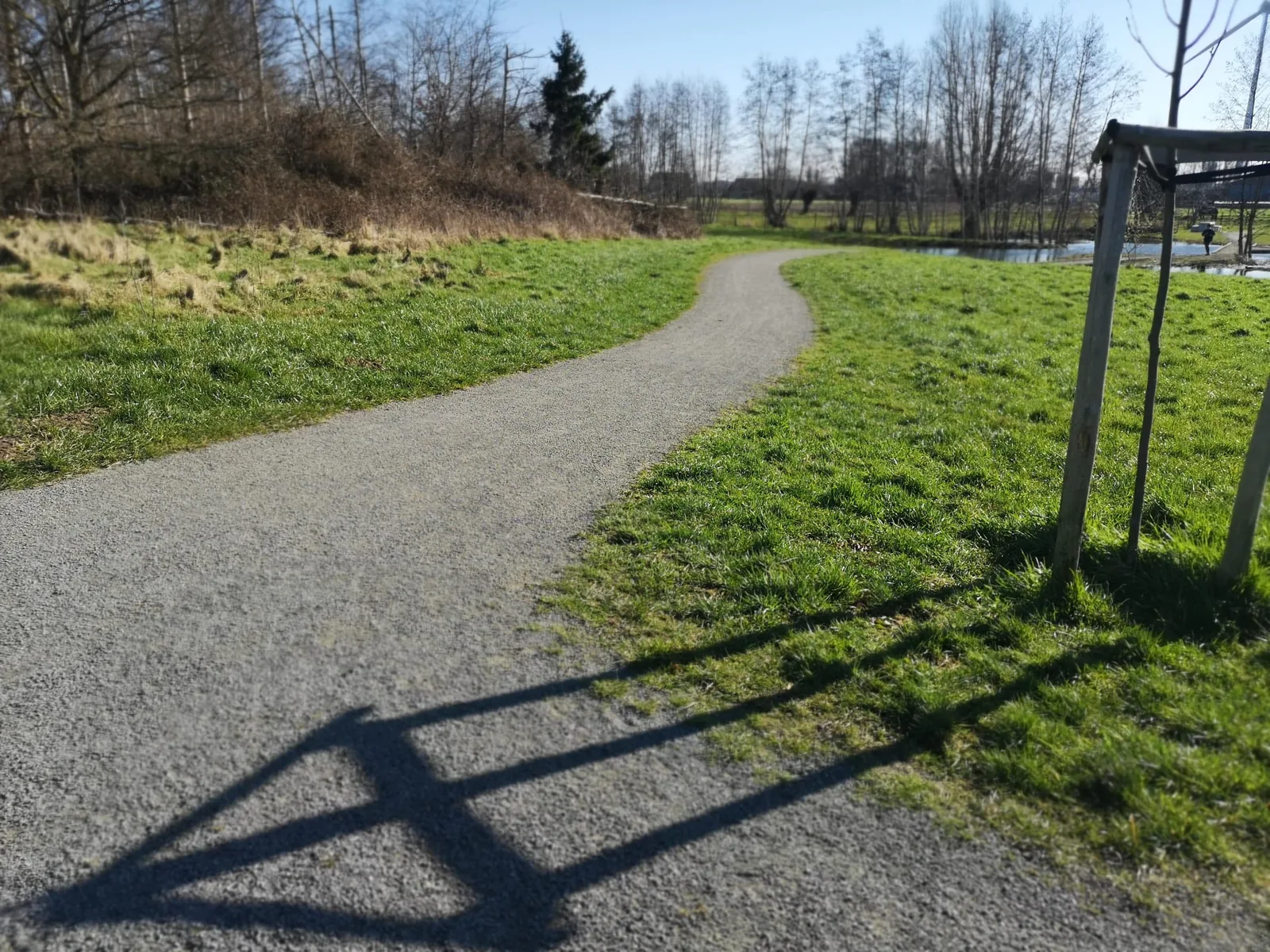
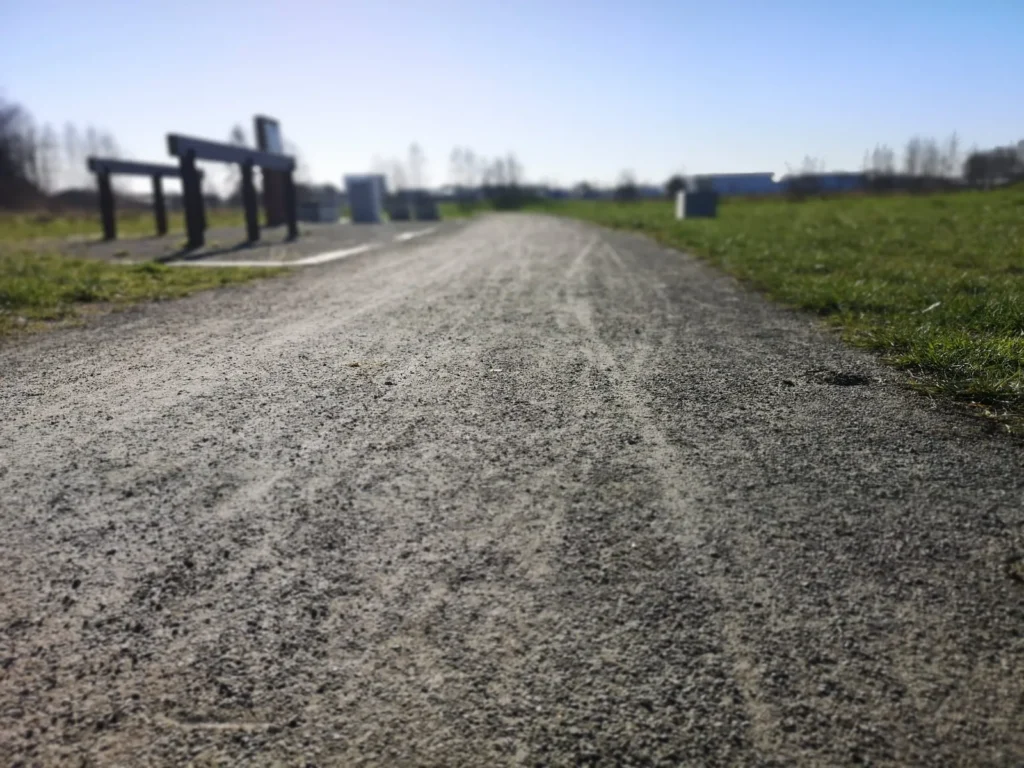
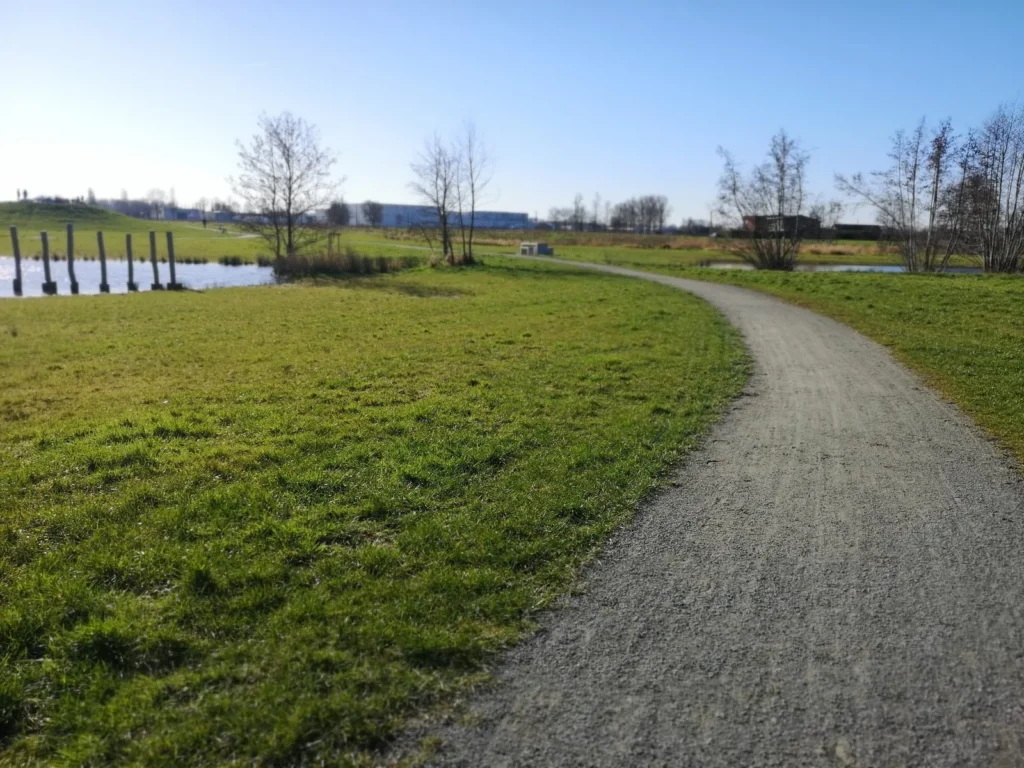
For the walking paths we used locally quarried porphyry. The material forms a permeable unbound gravel surface, suitable for pedestrians, cyclists and wheelchair users.
The combination of coarse sand and fine stone fragments keeps a natural look, with low CO2 emissions and full recyclability. The unbound gravel surface lasts a long time, needs little maintenance and can be repaired seamlessly with the same material.
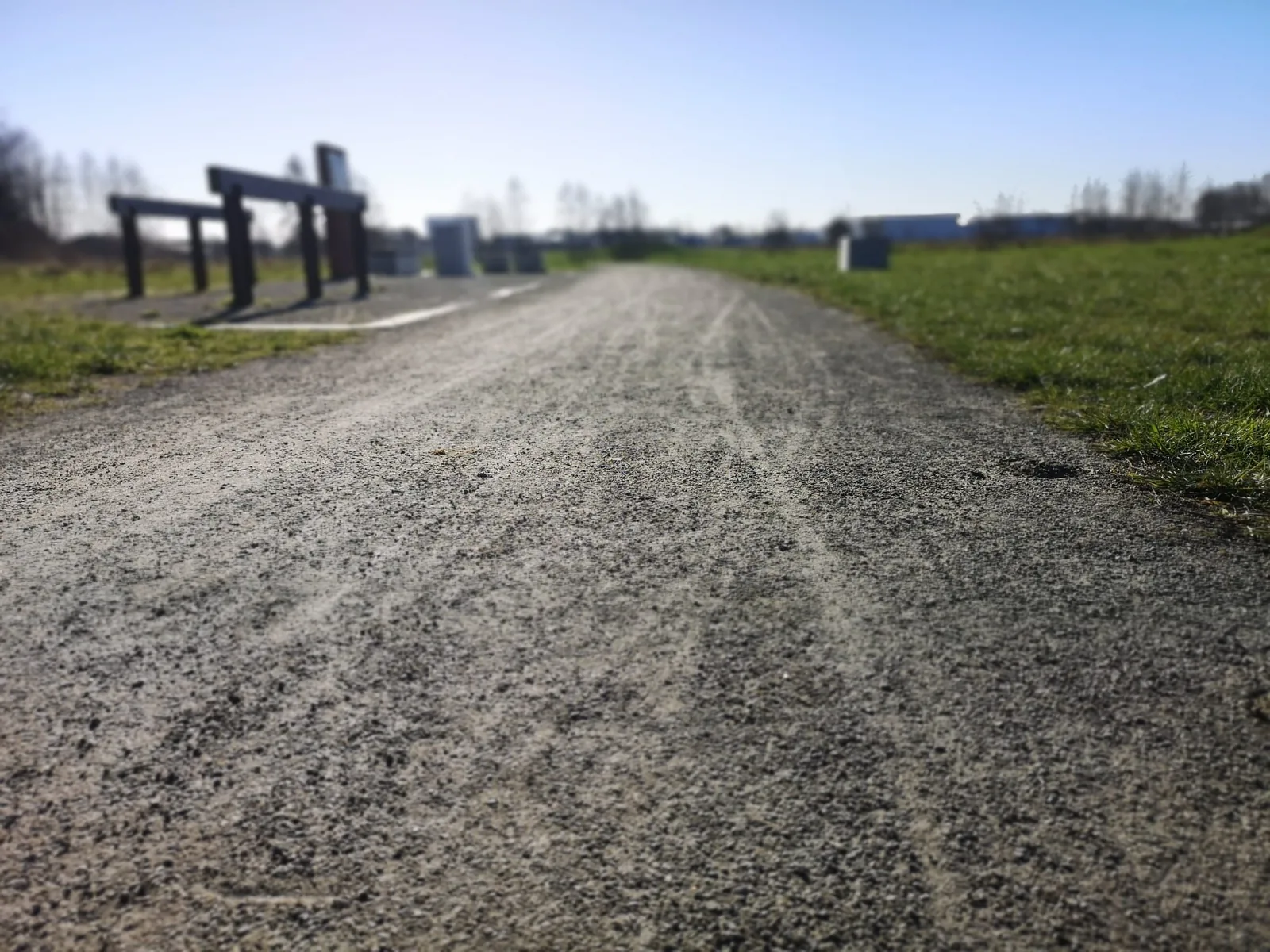
Towns and municipalities are investing heavily in slow-traffic routes, walking paths, green areas and parks. For these paths an unbound gravel surface is a good choice, because it lets water through and keeps a natural look.
This project shows a number of paths in Evergem, in a park that had been fully laid out shortly before. The paths are built with porphyry 0/4 and porphyry 0/6, a local Belgian product with low CO2 emissions.
The result can be walked on, used as a cycle path and is accessible for a wheelchair or for anyone less steady on their feet. For a repair you work with the same product, so afterwards you see no difference, unlike with asphalt or concrete.
An unbound gravel surface always consists of sand and fine crushed stone in the same colour. Usually coarse crushed sand 0/4 or 0/5, sometimes up to 0/6 or 0/15, optionally supplemented with natural mineral binders or cement. The photos were taken more than a year after construction.
Chosen every day by contractors, architects and industry professionals.
Request your non-binding quote and get professional, tailored advice for your application.
"(Required)" indicates required fields