Dolomite: the story behind the stone…

Grindvlak in Blanc de Provence met cortenstalen schalen

Dolomite, the story behind the stone…

Dolomite is a common name for a certain type of crushed stone (decorative gravel), just as we often do for other products, for example jeep for a 4×4 or SUV, while JEEP is also a brand name, or BiC as the generic name for a ballpoint pen. The same is true of the story of ‘dolomite’. In Belgium we notice that many different kinds of stone are sold under the generic name dolomite. But what do you actually get?

Historically

Historically, Belgium had a supply of dolomite from the quarries in the Belgian Ardennes. Those productions still exist, though on a smaller scale. In terms of quality, these materials do not always have the best reputation, at least not for paving driveways or as crushed stone. They often turn grey, crumble under regular traffic and give off a lot of dust. At their core these products (minerals) are intended for industry, because this stone is rich in calcium carbonate (CaCO3). The applications are wide-ranging, from iron production and animal feed to pharmaceuticals, etc.

Today

Today many traders try to offer an alternative in terms of both appearance and quality. The colours range from beige-grey to ochre-yellow or beige-brown. Of course, the client decides which kind they like best.

Also, Ghent Aggregates tries to offer an answer to this. We resolutely opted for the Blanc de Provence as the solution because in terms of “look and feel” this stone is very close to the classic ‘old’ dolomite, but also because it is far better in quality. This type of ‘dolomite’ is colourfast, harder and does not crumble. Once laid, and after the first rain shower, there will be no more dust release. In its original production environment this stone is also used as an aggregate in concrete production. This means it meets many strict requirements for durability, hardness and shape in terms of quality!
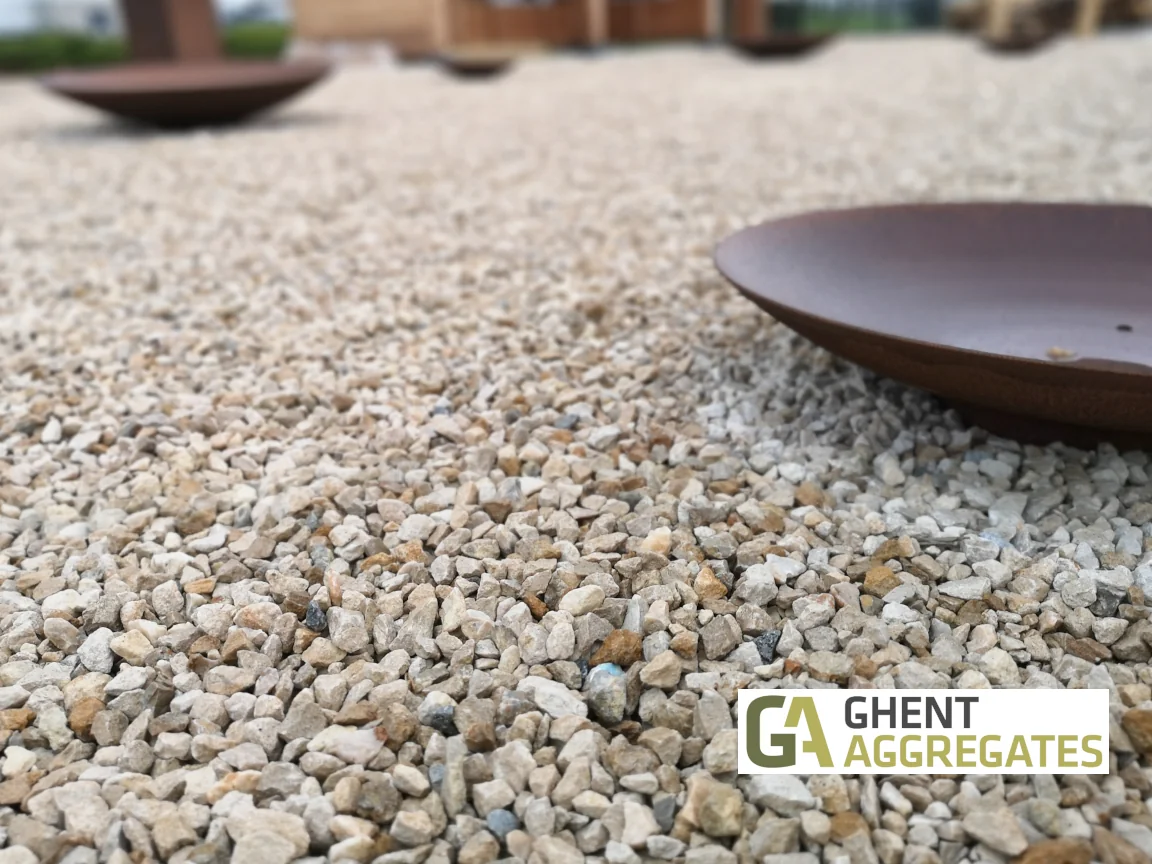
Note: the colour varies depending on whether the decorative gravel is wet or dry. On delivery, a little dust may also be present at first because of handling and transport. It washes away in the rain or you can rinse it off briefly after laying! This does not mean, however, that sand or dust is delivered, except for grain sizes that start at zero millimetres.

Availability

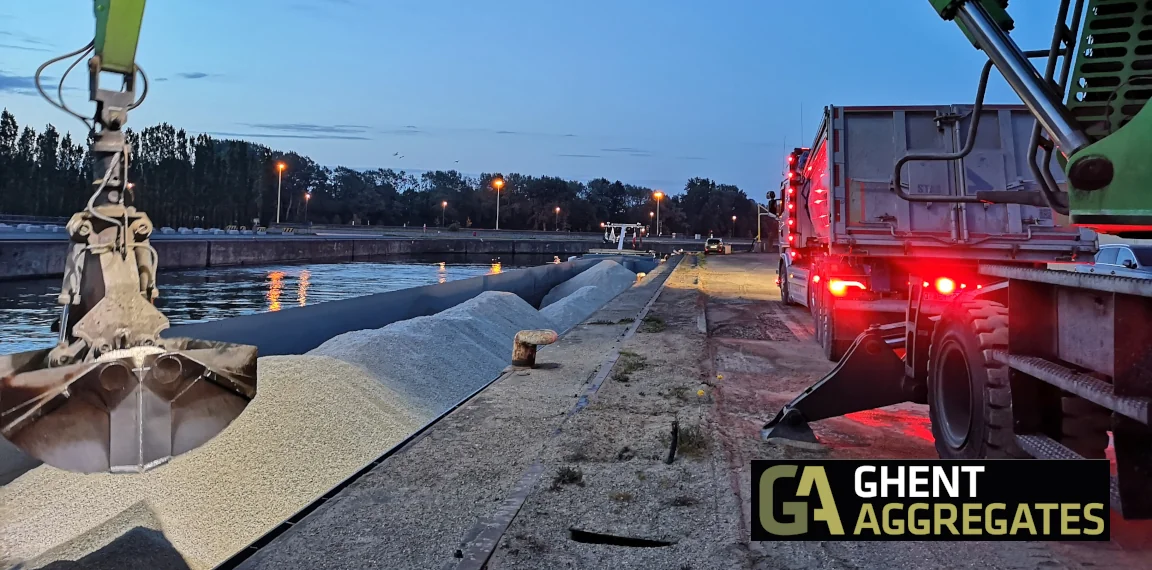
The Blanc de Provence is shipped to Ghent and is therefore available in large volumes. The great advantage is that we can deliver quickly from stock, and that its supply is also more CO2-friendly than classic transport by lorry over long distances. We also have the 5/16 mm grain size in stock, as well as the 0/5 mm sand fraction. That lets us meet all the needs of an unbound gravel surface at the same time, with the 0/5 or the composite 0/16 mm.

Grain size? What is it for…

For your driveway, finishing layer and in gravel stabilisers, it is best to use 5/16 mm
For a path, cycle path or driveway without gravel stabilisers, it is best to use 0/16 mm (unless you don't like the stone)
For a petanque court, path or walking trail, it is best to use 0/5 mm

Grijper lost Blanc de Provence uit een schip op de kade in Gent

Need help choosing your material?

Our experts are happy to help you choose. Ask for non-binding advice or a quote.